
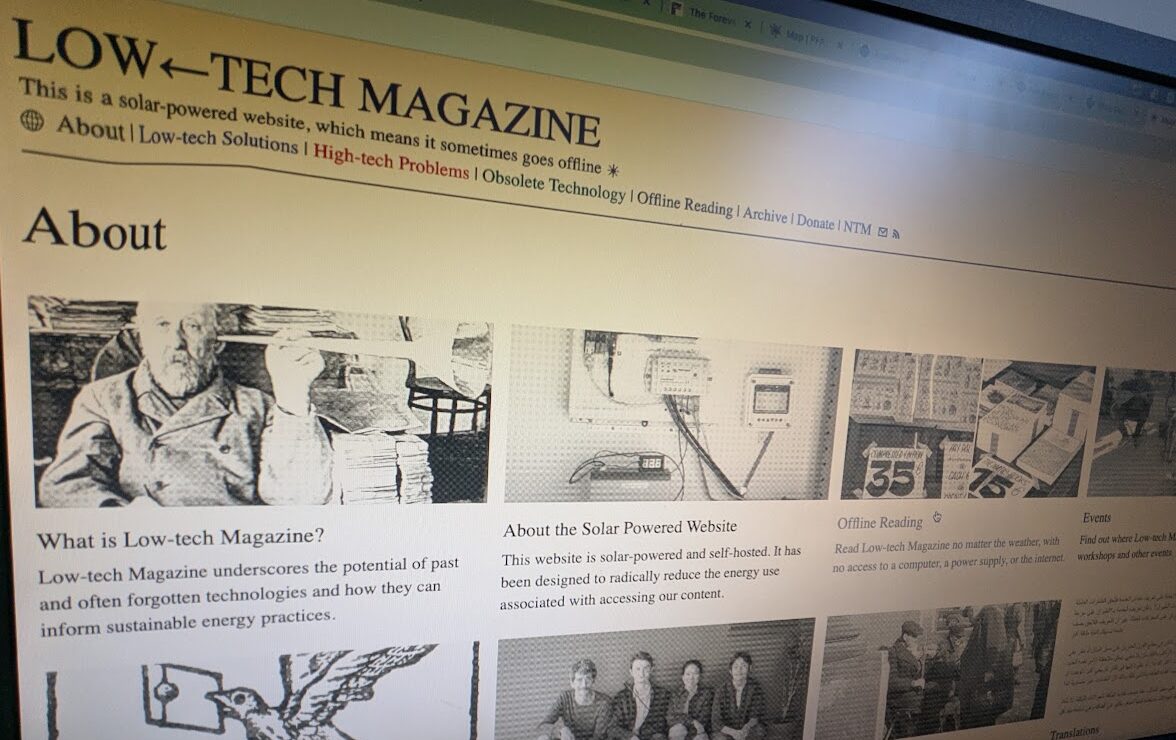
We’re used to treating the internet like an infinite resource. Pages load in milliseconds, high-definition videos auto-play, and servers sit in sprawling, climate-controlled data centers guzzling massive amounts of grid electricity 24/7/365.
Low-tech Magazine turned that model upside down.
Instead of hosting their publication on cloud servers powered by invisible fossil fuels, they built a self-hosted, solar-powered web server running directly off a small solar panel and a battery on a balcony in Barcelona, Spain.
When the sun shines, the site runs smoothly. When extended overcast weather hits and the battery drains? The website goes offline.
Why “Off-Grid” Web Design Matters
The digital world consumes an enormous amount of physical energy. As we explored in The Invisible Waste: How to Shrink Your Digital Carbon Footprint, our photo libraries, cloud backups, and unread emails create a hidden environmental impact. If the internet were a country, its energy consumption and carbon footprint would rival major industrial nations. Most modern web design trends—heavy scripts, uncompressed media, continuous tracking, and complex dynamic database queries—demand continuous high-voltage power.
Low-tech Magazine demonstrates what web design looks like when you treat energy as a finite, precious constraint rather than an unlimited backdrop.
The Ingenious Low-Power Tech Behind the Site
To keep the website accessible with minimal solar power, the publication overhauled its entire digital footprint through a creative use of eco technology:
- Static Site Architecture: Rather than relying on power-hungry content platforms that query a database or call APIs every time a page is loaded, the site is built using static HTML files.
- Dithered Image Processing: Standard high-resolution web photographs require significant bandwidth and processing power. Instead, images are converted into black-and-white or duotone “dithered” graphics, cutting image file sizes by up to 90% while creating a distinctive retro aesthetic.
- System-Native Fonts: The site eliminates custom web fonts (which force the user’s browser to download extra files), opting instead for default fonts already stored natively on the visitor’s device.
- Transparent Live Metrics: Visitors can check live server stats in the footer—including battery percentage, local weather forecasts in Barcelona, power consumption (usually around 2 Watts!), and current uptime.
Embracing “Digital Sobriety”
The most radical aspect of Low-tech Magazine’s solar site isn’t just its technical efficiency; it’s the cultural shift it asks of us as part of living a more sustainable lifestyle. In a world obsessed with 99.999% uptime, accepting that a site might occasionally go dark when nature doesn’t cooperate is a powerful reality check.
Check out the live server metrics at solar.lowtechmagazine.com—just hope it isn’t raining in Barcelona when you click!