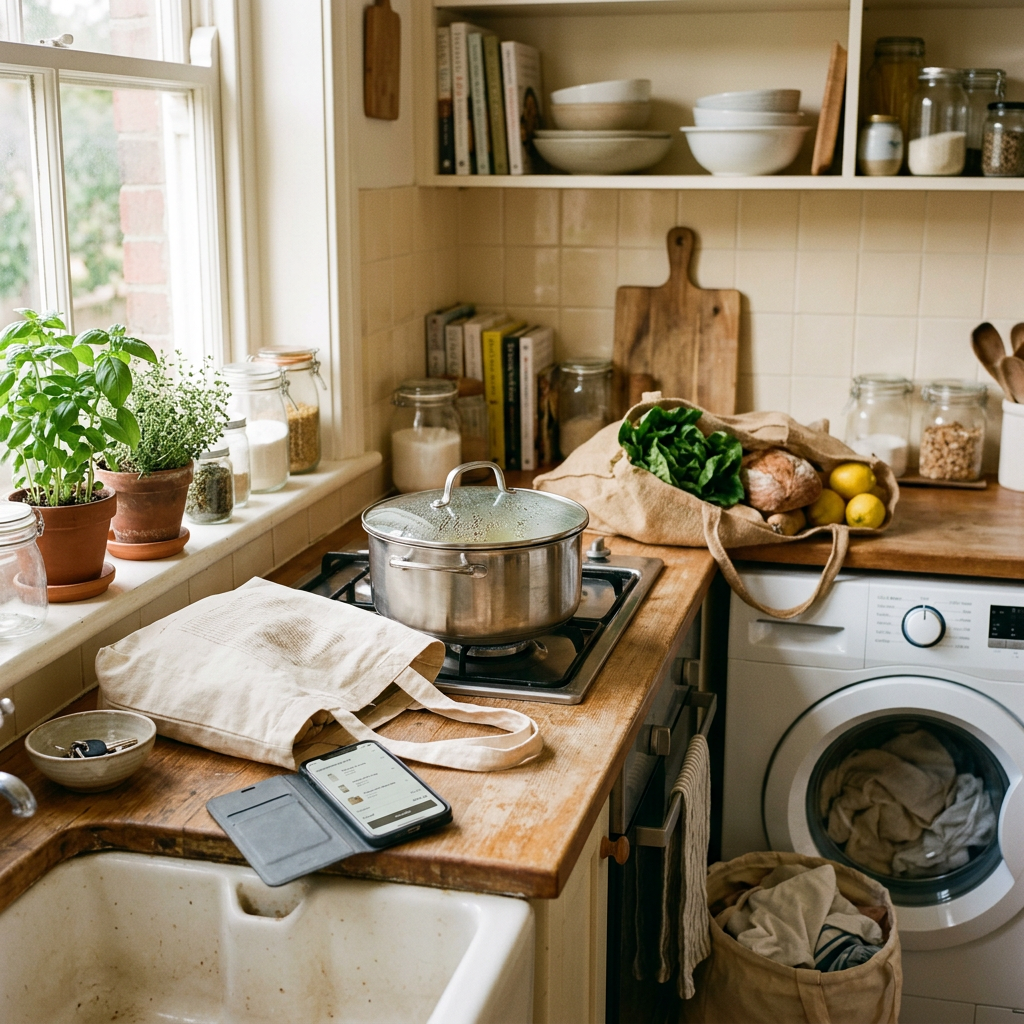
If your cotton shopping bags are currently sitting forgotten under a mountain of plastic grocery bags, take a breath: you haven’t failed the planet. Somewhere along the line, sustainable living got quietly hijacked by an image of flawless perfection. Depicting a world of pristine mason jars, zero-waste trash cans, and hyper-curated minimalist kitchens. But striving for eco-perfection is not only exhausting; it is counterproductive.
The reality of low-impact living is that the climate movement doesn’t need a handful of people executing zero-waste flawlessly. It needs millions of people doing it imperfectly, making small, repeatable adjustments that actually stick into everyday routines.
Ditch the All-or-Nothing Mindset
Eco-anxiety thrives on binary thinking: you are either a zero-waste saint or a reckless consumer. In truth, the real meaningful environmental progress lives in the unsexy middle ground. Swapping your daily disposable coffee cup just three days a week keeps over 150 cups out of landfills annually. That isn’t a partial failure; that is genuine progress. When we celebrate sustainable micro-habits rather than demanding immediate lifestyle overhauls, green choices no longer feel like a punishing chore.
Focus on High-Impact Micro-Swaps
Instead of attempting to overhaul your entire home overnight, pick one low-friction habit to tweak this week:
Cold-water laundering:
Shift your routine laundry cycles from warm water to cold settings (30°C or below). Up to 75% of a washing machine’s total energy goes solely toward heating water, yet modern detergents are formulated to clean just as effectively in cold water.
Thermal retention cooking:
Bring soups, grains, or pasta to a boil, cover tightly, and turn off the heat source. Letting residual heat complete the cooking process slashes kitchen energy usage without altering your meal plan.
The 48-hour shopping cart pause:
Before purchasing any non-essential item online, leave it in your digital shopping cart for two full days. More often than not, the novelty fades, saving both your wallet and the supply chain emissions required to ship it.
Living sustainably was never meant to be an elite aesthetic or an all-or-nothing endurance sport. It is simply a continuous series of tiny, deliberate choices stacked over time. Give yourself permission to be imperfect, lean into the small victories, and keep building a greener lifestyle—one practical shift at a time.